Explore Punakha
5 Nights / 6 Days
Punakha—the valley so blessed—was once the capital of Bhutan. The landscape is breathtaking and the valley sits on an unusually quiet at the confluence of two rivers. The visit to this valley will come with three-fold benefits, and those are; first, you will get to visit the valley that looks no less beautiful than Paro valley. Second, you will get to see the some of the rare birds like white-belled herion which are as rare of blue diamond in the world. And third, that the valley is so sacred. The majestic dzong was built by Zhabdrung Rinpoche in 17th century and remain as his main seat till his death.
Trip Highlights
- Tasting and enjoying whole different varieties of Bhutanese food.
- Learn to cook more then 15 different authentic dishes of Bhutan.
- Exploring food culture and different ingredients and vegetables.
- Learn how to make butter and cottage cheese and their delicacies.
- Learn to make Bhutanese salads and of different types.
- Learn to make momos/ dumpling and different noodles
- Visiting famous monastery, culture sites, villages and many more
Itinerary
Arrive in Paro, Bhutan, after a flight from Bangkok, Thailand. From Paro, you will drive to Thimphu, the capital city of Bhutan. En route, you will visit the Dechen Phodrang Central Monastic Body, a prominent monastic school that offers education to young monks.
We depart from Thimphu and head to Punakha. Our first stop is Dochula Pass, situated at an elevation of 3,150 meters. We will visit the Druk Wangyel Chortens, a site featuring 108 stupas built under the command of Her Majesty the Queen Mother, Ashi Dorji Wangmo Wangchuck, to commemorate the victory over Indian militants in 2003.
After that, we will descend and stop at Chhimi Lhakhang, a temple renowned for its association with fertility. It is widely believed that childless couples who seek blessings here will be granted their wishes.
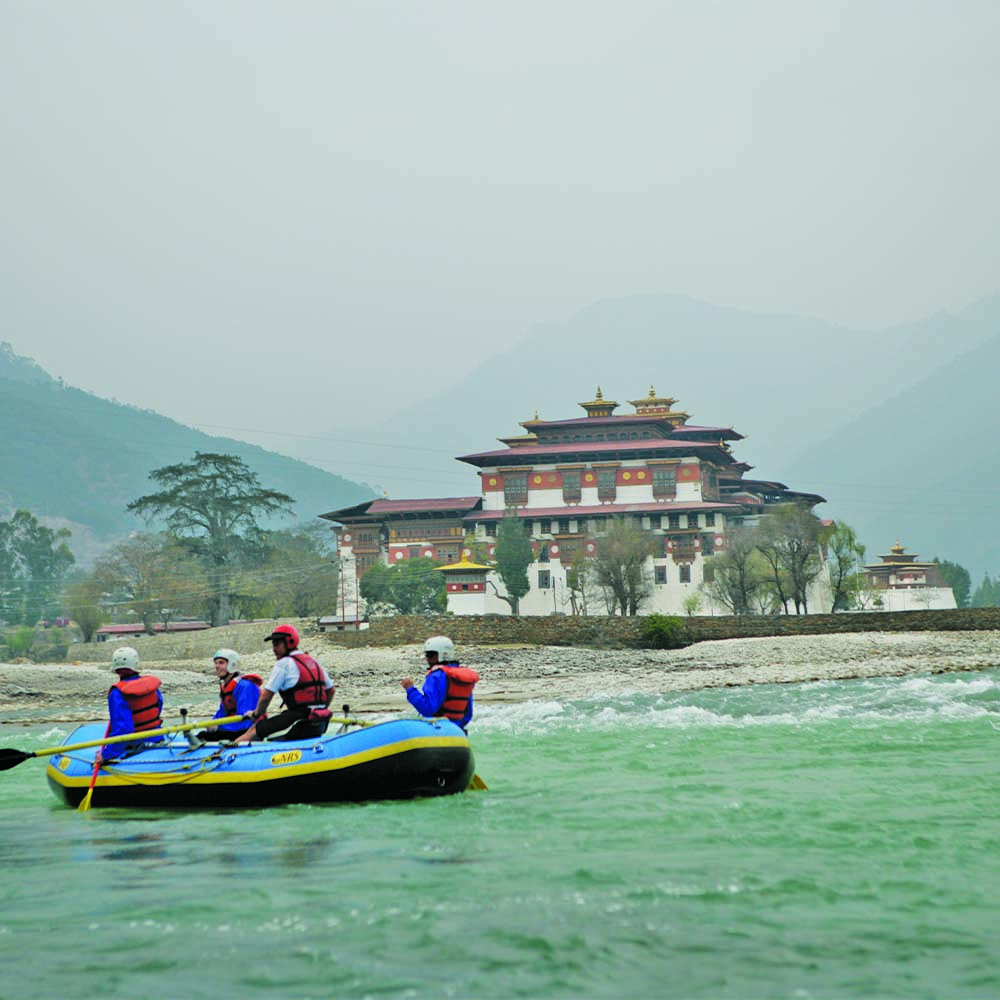
In the afternoon, we will visit the majestic Punakha Dzong, which sits at an elevation of 1,200 meters and served as the capital of Bhutan in the past. If time permits, we will also visit the Sangchhen Dorji Lhuendrup Nunnery.
Punakha is renowned for its breathtaking natural beauty, which rivals that of Bhutan’s classical songs. We will hike through rice terraces, golden fields, and forests to reach the Khamsum Yulley Namgyal Chorten.
The confluence of two rivers is Punakha’s signature feature, and river rafting on one of these rivers is an essential part of any visit to Punakha. In the afternoon, we will raft down the white waters of the Mo Chhu river, guided by experienced and trained rafters.
Right after an early breakfast, we will set out for Paro, a journey of nearly four hours. If time permits, we will stop at Semtokha along the way to visit the country’s oldest dzong, built in 1629 by Zhabdrung Ngawang Namgyel, the father of Bhutan.
After lunch in Paro, we will visit Paro Dzong, believed to have been constructed on a heap of jewels, giving it the name Paro Rinpung Dzong. Today, it serves as the seat of the district administration. The initial structure dates back to the 15th century, with most of the current building completed in the 17th century.
We will then visit the National Museum, which was originally a watchtower. Following that, we will explore Kyichu Lhakhang, one of the oldest temples in Bhutan, built in the 8th century.
A trip to Bhutan is incomplete without hiking to the Tiger’s Nest Monastery, also known as Taktsang Monastery, situated at 2,900 meters. Today, we will undertake this iconic hike, which will take at least two hours to reach the monastery.
Guru Padmasambhava built the monastery in the 8th century. According to legend, he arrived on a fierce tigress and subdued a demon that was terrorizing the valley’s inhabitants.
After the hike, we will visit a homestay and enjoy a cultural program with a traditional Bhutanese dinner in the evening.
Bid farewell to Bhutan and head to your next chosen destination – Bangkok, Delhi, Dhaka, Kathmandu, or Singapore.